
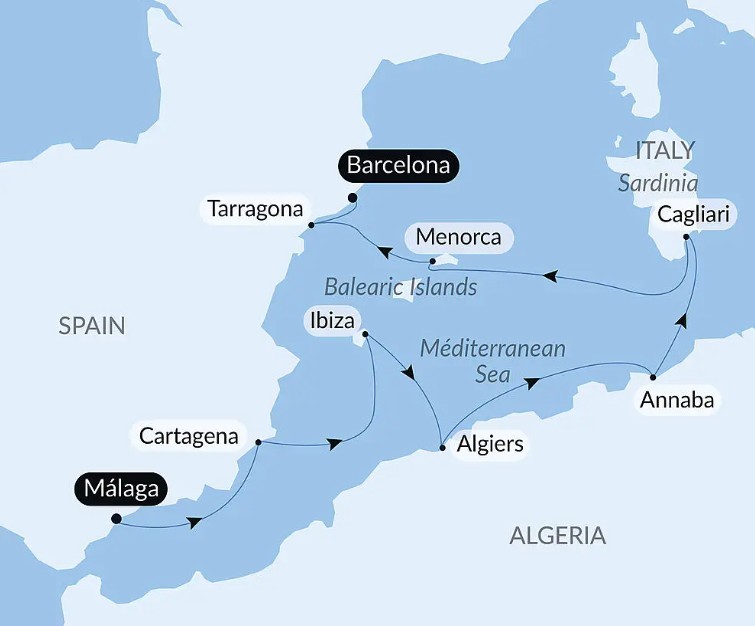
In the gentle Mediterranean spring, fall under the charms of the enchanting nature and unique history of Spain, Algeria, Italy and their island pearls. On these shores, the deep blue of the sea blends with the golden nuances of the rocks while the lush hills and centuries-old olive groves stand above wild coves and stretches of beach. Inland, the fragrance of the orange trees, almond blossoms and jasmine delicately perfumes the small streets of ageless cities, revealing a glorious past, between ancient vestiges and heritage treasures. A journey at the crossroads of history and nature, a veritable invitation to enjoy the tranquillity of sites imbued with charm and elegance.
- Discover the natural and historic treasures of the Western Mediterranean, in the gentle spring, between Spain, Algeria and Italy.
- Discover exceptional historic sites (the Casbah in Algier; the ruins of Tipaza - a UNESCO World Heritage Site) and unique nature (including Ibiza, UNESCO-listed for its marine ecosystem).
- Among your included excursions: a cavalcade at a finca in Cartagena; a stroll among the narrow streets of the Casbah in Algiers; the ruins of Hippo Regius in Annaba.
Availability is always subject to confirmation. Please check with us before booking flights
Prices quoted here are often dependent on currency fluctuations. Please check with (01432 507450 or info@small-cruise-ships.com) for the very latest price, which may well be cheaper than the one advertised here.


L'Austral
Luxury Expedition / Cruise Ship
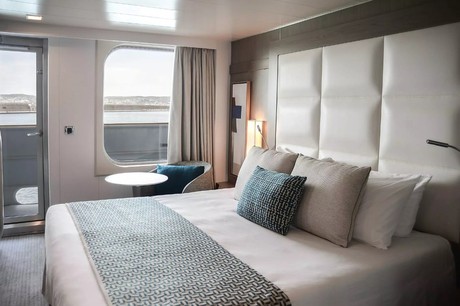
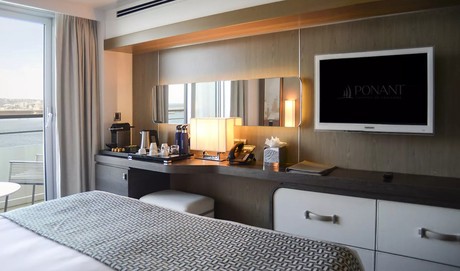
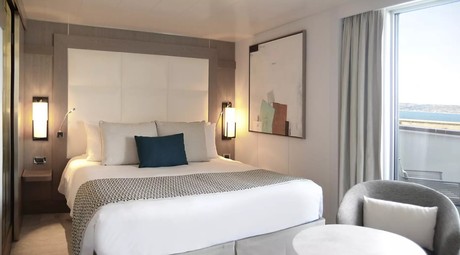
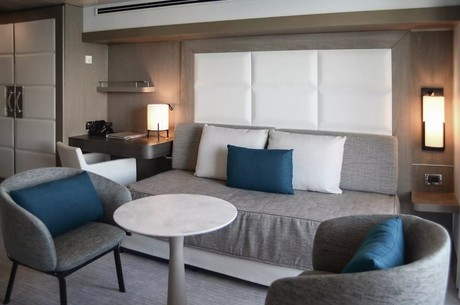
This superb mega-yacht with 132 cabins is the result of the expertise of the Italian Fincantieri shipyard and French sophistication, as interpreted by designer Jean-Philippe Nuel. L'Austral has a unique atmosphere, a subtle blend of luxury, intimacy and well-being.
A sleek silhouette softened by elegantly smooth contours and large, arched windows opening up to the sea and the light: so many features come together to give L’Austral her distinctive shape. Precious materials, discreet elegance and a perfect balance between chic and casual, combine to make you feel as if you are on your own private yacht. A design blending tradition and innovation, where a nautical mood has been subtly recreated. Precious materials in smoothing neutral tones are brought to life with splashes of cheerful reds. So many personal touches create the spirit of a “private yacht”.
Suites and staterooms
You can expect magnificent ocean views as 124 staterooms and suites have balconies.
Individually-controlled airconditioning • Cabin layout: kingsize bed, or twin beds, communicating cabins available (children welcome) • Minibar • Flat screen satellite TV • IPod™ players • Desk with stationery • Electronic safe • French bath products • Dressing table and hairdryer • Bath robes • Satellite direct line telephone • 110/220 volts • 24hr room service • WiFi • Balcony
Cuisine
Loyal to the great French tradition, the haute cuisine on board is worthy of the finest restaurants, where discreet, attentive service is the hallmark.
Choose from two restaurants for breakfasts, lunch and dinner. The Gastronomic Restaurant is situated on Le Liberté Deck and serves you French and international cuisine accompagnied by fine wine. On the Grill Restaurant, you have the opportuniny to eat outside and enjoy buffet lunch and themed dinner.
Life On Board
Whether you want to join other guests in the theatre or games area (Wii™ consoles, etc), or relax on your own in a quiet corner of the library, L'Austral has been designed to meet the needs of every guest.
Everything has been done to preserve the independence of each guest to suit their personal tastes: lounges for lectures and shows, a spa in partnership with Sothys™, but also more intimate spaces such as the library and internet corner. Comfortable cabins, nearly all with private balcony, are available for families either as triples or as communicating cabins. There is also a games area with Wii™ consoles, children’s menus, and a baby-sitting service. Just as if you were on a private yacht, your time is your own to do as you please.
Fitted with the latest equipment (Kinesis Wall, running machine) and in partnership with the famous Sothys™ brand, the Beauty Centre on L'Austral welcomes you for some unforgettable moments of relaxation and pampering (beauty treatments, hairdresser).
Wheelchairs3 specially adapted wheelchair cabins (Deck 3 = Superior cabin no. 307, no balcony, Deck 4 = Prestige Cabin no. 407 - with balcony and Deck 5 = Prestige Cabin no 509, with balcony) and lifts to all decks/areas.
Details
Length: 142 metres. Passenger Capacity: 264 (200 in Antarctica). Built: 2011
Please click the following links to read more about Ponant and the other Ponant cruise ships.


Deck plans are for illustrative purposes only – The actual ship and cabin layout may differ.

Includes
- accommodation in stateroom,
- the full meal plan,
- the Open Bar: beginning with boarding, and during the duration of the cruise, a wide selection of drinks (mineral water, soft drinks, wine, beer, Charles Heidsieck champagne, spirits, coffee, tea) is served on request and at any time of the day. Certain premium alcoholic beverages on the menu are not included in the Open Bar,
- free Wi-Fi internet access 24 hours a day*,
- access to all the common areas:
- on board our sister ships and Ponant Explorers: fitness room, steam room, hair salon, swimming pool (sea water, heated), solarium, lounges, theater, boutique & leisure area.