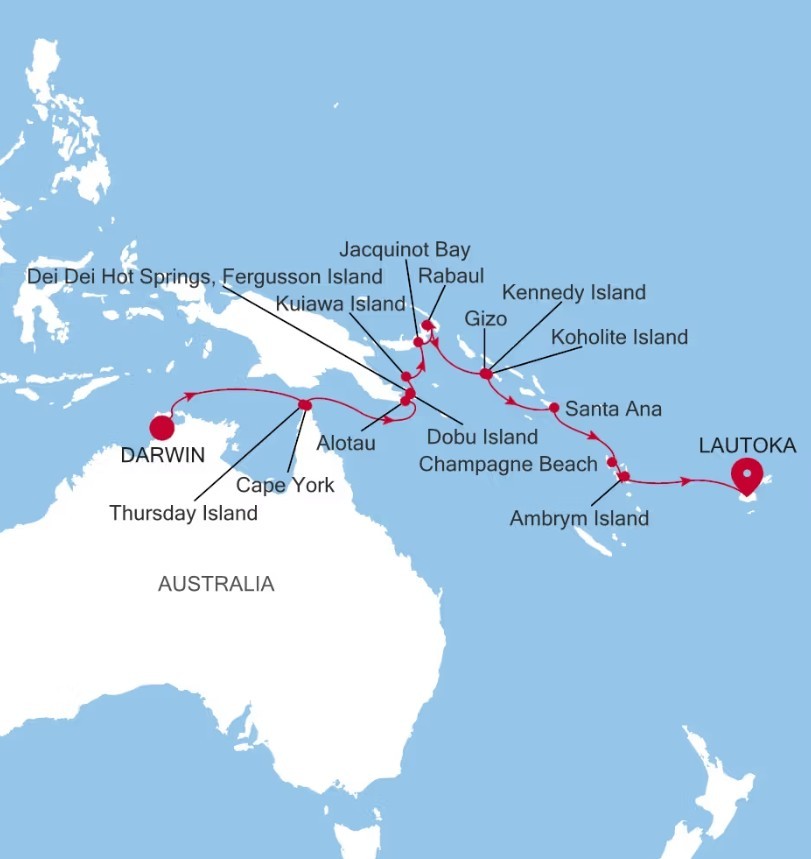
From Darwin’s crocodile creeks to the hidden reaches of the Great Barrier Reef — and on to distant South Pacific islands. Explore Australia’s northern tip before delving into the world’s most famous barrier reef — encountering azure shallows, coral beds, and curious giant potato cod. From the Cape York and Thursday Island’s white sands to Solomon Islands' lagoons, then on to Ambrym Island to experience a traditional Rom dance, integral to the island's spiritual heritage.
- Trace a route from Australia’s Top End to the remote South Pacific, combining reef exploration with culturally rich island landings.
- Encounter the Great Barrier Reef’s lesser-visited reefs and islands, including close-up coral habitats and distinctive marine life.
- Experience authentic Melanesian traditions, from Papua New Guinea’s volcanic landscapes to Ambrym’s ceremonial Rom dance.
Availability is always subject to confirmation. Please check with us before booking flights
Prices quoted here are often dependent on currency fluctuations. Please check with (01432 507450 or info@small-cruise-ships.com) for the very latest price, which may well be cheaper than the one advertised here.
Australia's capital of the north is a uniquely tropical city, and a historically isolated outpost of this vast, diverse country. Reaching up towards the equator, a full 2,000 miles from Sydney and Melbourne, the city was named in honor of Charles Darwin by the British settlers who established a frontier outpost here. With a unique history, beautiful islands nearby, and a palette of sizzling Pacific flavors, colorful Darwin is an enchanting and exotic Australian destination. Crocodiles patrol the jungled waterways and tropical rainforests around Australia's gateway to the Top End. Explore via airboat to look down on the veiny waterways of the mist-laced Kakadu National Park. The sounds of chattering birdlife and the gentle splash of fountains and waterfalls will fill your ears in George Brown Darwin Botanic Gardens. Soak it all in, before kicking back and relaxing with a picnic and a crackling barbecue. The sunshine and famous tropical pink sunsets mean many visitors naturally gravitate to the city's soft sands to relax at spots like pretty Mindil Beach, as evening approaches. The adjoining market is filled with souvenirs and crafts stands and is the perfect place to enjoy some fiery Asian flavors. Stroll the stalls, grab some food, and crack open an ice-frosted beer as the sunset show begins. It may be remote, but Darwin found itself on the front line during the Pacific War, as the Japanese air force unloaded their bombs onto the city in 1942. This relaxed unassuming city has a deeply resilient backbone, however, and you can explore the museums to learn more of the war's impact on Darwin, as well as the devastating effects of one of Australia's worst natural disasters, Cyclone Tracy in 1973.
Days at sea are the perfect opportunity to relax, unwind, and catch up with what you've been meaning to do. So whether that is going to the gym, visiting the spa, whale-watching, catching up on your reading, or simply topping up your tan, these blue sea days are the perfect balance to busy days spent exploring shoreside.
Hit the dizzy heights of the very top of Australia. A sign here marks the northernmost point of the Australian continent, and only the truly adventurous make it this far. The reward is rich - to stand on top of the continent and survey the Torres Strait's island-pocked waters. The lurking crocodiles here add to the sense of wildness and achievement in reaching this exclusive spot. Dense rainforest of eucalyptus trees harbors thousands of plant varieties, including the flashy Cooktown orchid and the medicinal Pandanus palm, and Aussie animals, like the rainbow-hued finches and elusive tree kangaroos. The region's cultural heritage is no less rich and vibrant than the natural surroundings, and multiple Torres Strait Islander and Australian Aboriginal cultures have lived here for thousands of years. Learn about their traditions, art, and connection to the land at this northernmost point of tropical Queensland.
Thursday Island – TI to locals or Kawrareg in Waiben dialect – is the ultimate Aussie retreat. Grab a cold beer, find a spot on a wooden pub deck overlooking turquoise blue seas, and contemplate the remote beauty of the island. Whilst certainly not the biggest of the Torres Strait Islands, it is the most populated. That is not to say it’s a bustling metropolis. At last count, there were fewer than 3,000 residents for its 3.5 square kilometers. The Torres Strait Islands is a 274-strong archipelago found scattered between the coasts of mainland Oz and Papua New Guinea. The origin of the name is unknown; what is certain however is that Captain Owen Stanley named neighboring islands Tuesday, Wednesday, and Friday when he visited in 1848, so it is a safe assumption that he named Thursday too. Thursday and Friday’s names were swapped about 8 years later so they appeared in weekday order. Budding explorers should note that Monday, Saturday, and Sunday have yet to be found, so perhaps this could be your lucky day. The island enjoyed a lucrative pearl and shell trade until WWII, and many Japanese pearl divers became residents. This worked out well for the islanders; Thursday Island was mercifully left alone during the extensive WWII bombings, probably because it was thought that there were Japanese nationals still living there (there weren’t). Superb and pristine examples of the island’s heritage still stand and can be seen in the Green Hill Fort, the Thursday Island Customs House, and the Gab Titui Cultural Centre.
Days at sea are the perfect opportunity to relax, unwind, and catch up with what you've been meaning to do. So whether that is going to the gym, visiting the spa, whale-watching, catching up on your reading, or simply topping up your tan, these blue sea days are the perfect balance to busy days spent exploring shoreside.
Alotau is the provincial capital of the Milne Bay Province located in the southeast bay of Papua New Guinea. The town and surrounding area has been an important staging ground during World War II and you'll discover remains and memorials dating back or referring to the war. On a tour of the town, visitors will appreciate lovely vistas of the bay and experience the markets, which are frequented not only by locals, but also by islanders selling their products or looking for produce to take back into Milne Bay. Alotau is an important port facility for the islands and attracts many vendors of handicrafts from different islands.
Fergusson is one of the three biggest and mountainous islands in the Milne Bay Province, and part of the D’Entrecasteaux Islands. On Fergusson’s south side are the famous Dei Dei geysers - natural hot springs that periodically erupt with vapor steam next to mud pools and a warm stream. The hot springs are still used by locals to cook food in palm fronds and pandanus leaf baskets placed into the boiling hot water. Birds in the area include Eclectus Parrots, Yellow-bellied Sunbirds, and the endemic Curl-crested Manucode – a bird of paradise.
Dobu is a small island in the D’Entrecasteaux Group next to Fergusson Island and Normanby Island. The island was formerly feared because of black magic and the local “witch” doctors cursing the healthy or treating the sick. An anthropological study was done by Reo Fortune in the 1930s which resulted in the book “The Island of Sorcerers”. The island is also part of the famous Kula ring. Participants in the exchange system pride themselves with mwali and soulava (armbands and necklaces) that are given and received still today and it is interesting to see how the traditional objects have been adorned with modern paraphernalia. A stroll through the main village on the northwestern tip will show the school and church and trails leading along the shore passing traditionally thatched houses and gardens.
Kuiawa (Kuyau) is one of the Trobriand Islands, the northernmost islands in the Milne Bay Province. Kuiawa is found some 200 kilometers from the province’s capital and to the southwest of Kiriwina, the largest and best-known of the islands. The Trobriand Islands are of uplifted limestone and gardening is not that easy – but Trobriand Islanders are known for their magic to improve the growth of yam, a highly desired plant for ceremonial reasons and as food. Certain islands and villages have yam houses where the larger yams are stored and displayed. Houses are strung along the main road through the village and beach almond, casuarina, and frangipani trees give shade. Trobriand Islanders are famous carvers and dancers and local groups and school classes love to compete dancing or playing their version of cricket, especially during harvest time.
Jacquinot Bay is a large open bay on the eastern coast of the island of New Britain. It is a tranquil place with white sandy beaches and tropical palm trees all around. There is also a well-known beautiful waterfall that flows out of the mountainside with freezing cold water right onto the beach. But during WWII, however, it was not a quiet place. It was, in fact, an important base for the Australian Army who liberated it in November 1944. This base was used to support Australian operations near Rabaul which were conducted in early 1945 in conjunction with advances on the northern side of New Britain.
If surreal and unique experiences are your thing, then the Papua New Guinean town of Rabaul should tick your travel boxes. Found on the north eastern tip of New Britain Island (the largest island off mainland PNG) Rabaul, the former provincial capital, has quite a remarkable location. The town is inside the flooded caldera of a giant volcano and several sub-vents are still quite active today! The lively city was almost entirely devastated by Mount Tavurvur in 1994, covering the city in ashfall, but thankfully costing no lives. Since then, thanks to Rabaul’s deep-water port, commerce has been on the up, and a few shops and hotels have managed to find an audience. However, Rabaul’s remote location together with the volcano still being one of the most active and dangerous in Papua New Guinea means tourism is not rife. Rabaul has an impressive WWII history which includes a 300-mile network of tunnels dug by Japanese POWs designed to conceal munitions and stores. After the Pearl Harbor bombings, the Japanese used Rabaul as their South Pacific base for the last four years of WWII, and by 1943 there were about 110,000 Japanese troops based in Rabaul. Post war, the island was returned to Australia, before it was granted independence in 1975. It should be noted that patience is a virtue here. However, that is not all bad. The slow pace of transportation allows travelers to marvel at the quite astonishing landscape.
Days at sea are the perfect opportunity to relax, unwind, and catch up with what you've been meaning to do. So whether that is going to the gym, visiting the spa, whale-watching, catching up on your reading, or simply topping up your tan, these blue sea days are the perfect balance to busy days spent exploring shoreside.
Wild, uninhabited, and historical, Kennedy Island is a tiny piece of land in the middle of the Pacific Ocean. Part of the remote Solomon Islands, the island is situated 15 minutes away by boat from Gizo, which is capital of the Western Province. Kennedy Island was formerly known as Plum Pudding Island, after an incident dating back to World War II. An incident involving one of the most famous figures in history.
John F. Kennedy, a lieutenant at the time, was a castaway on the island with his crew when their torpedo ship, PT 109, was sunk by the Japanese troops in August 1943. It is said that the future president swam dragging an injured crewmate by holding the strap of his life jacket in his teeth until reaching the island. He and his crew fed themselves with coconuts for two days before being found by Solomon Islanders. JFK even kept a coconut shell from the island on his desk in the Oval Office throughout his presidency.
For our history buffs, some artifacts dating from the crew’s passage can still be found on site. An island marked by history in short, but not only. Discovering Kennedy Island is an experience not to be missed for diving and nature lovers. The waters that surround the island are a submerged world of great richness and variety of colorful fishes and corals.
Port Mary is the name of the bay adjacent to Ghupuna, the main village in Santa Ana. A bright white sand beach with huge shade-giving trees runs along the shoreline in front of the tidy village. The houses here are made with local materials and most are built on stilts. Islanders generally welcome visitors with traditional songs and dances performed by members of the three different villages in Santa Ana. Some local people will also set up stands offering souvenirs for purchase. The Solomons are best known for strings of traditional shell money and elegant carvings based on local stories and legends.
Days at sea are the perfect opportunity to relax, unwind, and catch up with what you've been meaning to do. So whether that is going to the gym, visiting the spa, whale-watching, catching up on your reading, or simply topping up your tan, these blue sea days are the perfect balance to busy days spent exploring shoreside.
As world-famous beaches go, Champagne Beach is one of the big hitters. In 2003, CNN ranked it number nine in its list of top 100 beaches, and independent travel specialists permanently include it on their lists of 50 best beaches worldwide. It's one of the world's greatest natural beauties: picture-perfect beach white sand, turquoise water, and nothing - save for the occasional cow or curious turtle - around. With only coconut plantations and a few friendly locals to keep you company, this might just be the island of your dreams. The glorious name "Champagne Beach" was given to the island in the 17th century, when Pedro de Quirós believed he had reached the famous unknown southern land or the “Tierra Australis Incognita” (or Australia as we now know it). He believed the effervescent bubbles of volcanic origin that bubble up from the crystal-clear waters were reminiscent of the bubbles of Champagne. Additionally, the coastline is shaped like an Art Deco Champagne saucer, so the name stuck! The beach is located on the largest yet least populated island in the 40-island Vanuatu archipelago, near the village of Hog Harbor on Espiritu Santo Island. If you want to venture beyond the beach, then Espiritu Santu is also famed for its blue holes. The island is home to some of the clearest waters on Earth, benefiting from natural filtering from underground limestone caves.
Unlike Espiritu Santo, with its raised coral reefs and white sand, Ambrym is a volcanically active island with dark sand beaches. Ambrym is known as the island of magic and is the source of five local languages that all evolved on Ambrym. This handful of languages contributes to the well over 100 languages of Vanuatu. Some of Ambrym’s magic takes place in the lush greenery of the local community of Ranon. Here the people perform a very special and traditional "Rom" dance. Participants prepare their masks and costumes in secrecy and the dance is reserved for special occasions.
Days at sea are the perfect opportunity to relax, unwind, and catch up with what you've been meaning to do. So whether that is going to the gym, visiting the spa, whale-watching, catching up on your reading, or simply topping up your tan, these blue sea days are the perfect balance to busy days spent exploring shoreside.
It doesn't get much sweeter than arriving on the sun-soaked shores of the Sugar City. Fiji's second-biggest settlement opens up a world of blissful beaches and turquoise seascapes, while its dense jungle lures the adventurous deep into its embrace. Step ashore where the first Fijians landed, and you'll understand instantly why they chose to make this island paradise their heavenly home. Experience rich Fijian life, and see dramatic displays like warrior dances, and remarkable local practices like firewalks, which kick up burning embers into the night's sky. Legend says the city took its name after two chiefs faced each other in a duel. A spear pierced one of the chiefs, leading to the shout of 'lau-toka!' or 'spear hit!' Sugar is Lautoka's main trade, but its botanical gardens are a sweet insight into the tropical plant life that thrives here - from pearl white lilies to tall, fragrant orchids. Explore temples, charming cafes, and mills - or barter for some of the juiciest mangoes you'll ever taste at the city's lively market. You'll only be able to resist the beaches for so long, and it doesn't get much more stunning than the Blue Lagoon - a heavenly blend of woven-together turquoise shades. Remote, wild, and unspoiled, these are some of the best tropical beaches in the world. There's more rejuvenating relaxation at the mineral-rich mud pools and spas, fueled by the volcanic activity below. Savala Island is a teardrop of sand offshore and another beautiful place to wander with the soft powder between your toes - along sandy spits that peter out into the water. Or swim and snorkel among its envied reefs, thronging with fish life.
Itineraries are subject to change.
Silver Cloud
| Refurbished: | 2017 |
|---|---|
| Crew | 212 |
| Tons | 17400 |
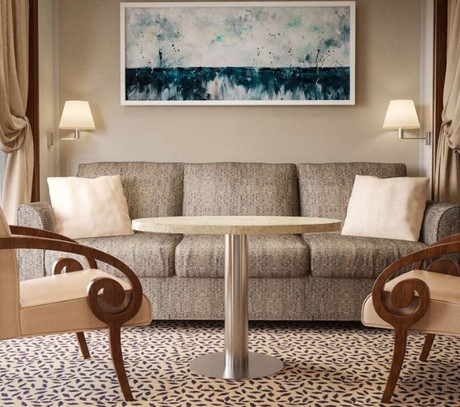
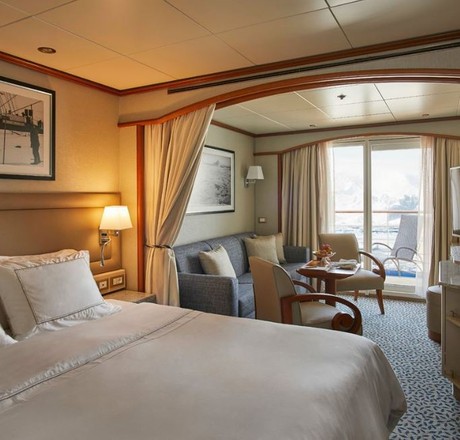
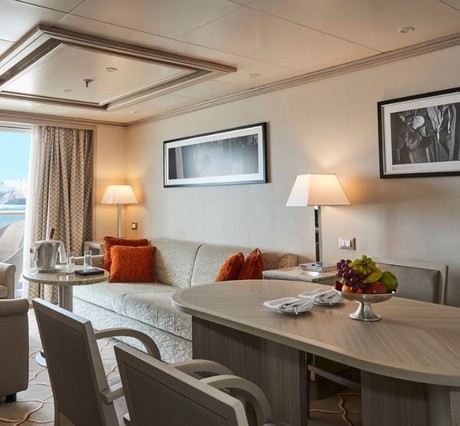
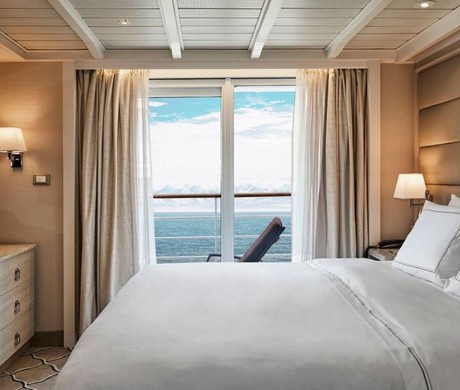
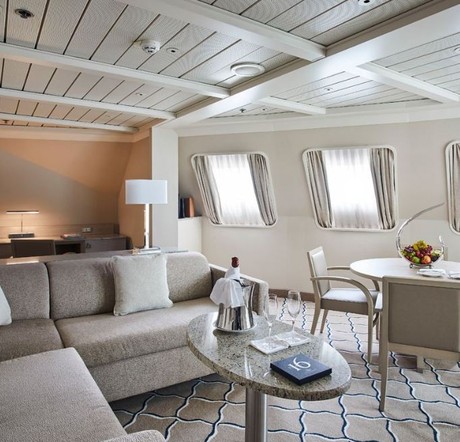
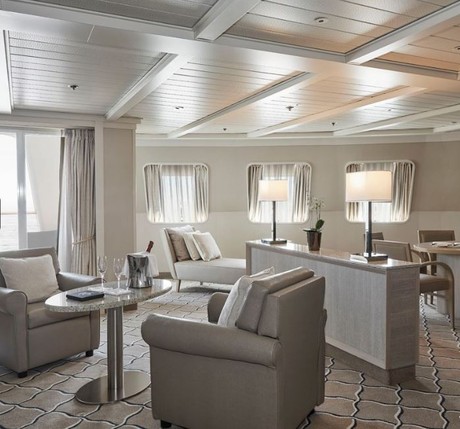
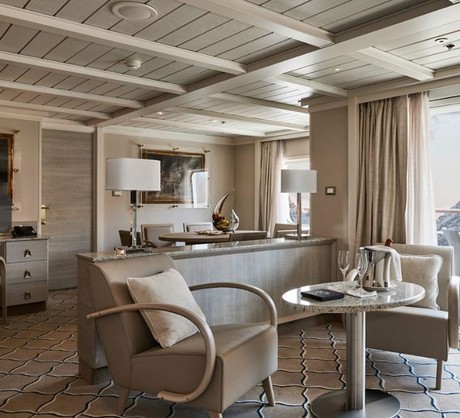
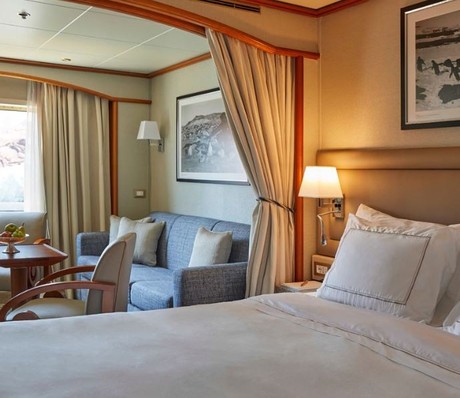
With 18-brand new Zodiacs, four superlative restaurants in Antarctica and a pole to pole expedition itinerary, Silver Cloud really does break the ice between expedition and luxury. Spacious yet intimate, designed to cross oceans and yet able to slip up rivers and into hidden harbours with ease, the yacht-like Silver Cloud carries just 296 guests in incomparable comfort and style. Combining spacious ocean-view suites and private verandas with stunning dining and entertainment options, Silver Cloud provides world-class cruise accommodations, service and amenities.
After extensive refurbishment, Silver Cloud is the most spacious and comfortable ice class vessel in expedition cruising. Her large suites, her destination itineraries and her unparalleled service make her truly special. Her four dining options will tantalise your taste buds and as 80% of her suites include a veranda, watching a breaching whale or a few cavorting penguins has never been so personal. She carries a limited number of guests in polar waters, meaning that Silver Cloud has the highest space to guest and crew to guest ratios in expedition cruising. With her 18 zodiacs, 10 kayaks, possibilities are almost limitless with ship-wide simultaneous explorations.
Deck plans are for illustrative purposes only – The actual ship and cabin layout may differ.